
Education
Commonwealth Secretariat Boosts Disaster Recovery Efforts with Innovative Funding Schemes


New Initiatives Pave the Way for Resilient Member States
In a groundbreaking move, the Commonwealth Secretariat in London has unveiled a series of exceptional projects aimed at enhancing disaster recovery funding arrangements for its member states. These initiatives come at a crucial time when climate change-induced disasters are becoming increasingly frequent and severe across the globe.
Launched in April 2024, the Commonwealth Disaster Recovery Fund (CDRF) stands out as a flagship program. This innovative funding mechanism provides rapid access to financial resources for member countries in the immediate aftermath of a disaster. The CDRF’s unique feature lies in its pre-arranged nature, allowing for swift disbursement of funds without the need for time-consuming negotiations during crisis situations.
Another noteworthy project is the Commonwealth Resilience Index (CRI), introduced in June 2024. This comprehensive tool is designed to assess and improve member states’ capacity to withstand and recover from disasters. The CRI not only measures vulnerability but also provides tailored recommendations for enhancing resilience, making it an invaluable resource for policymakers and disaster management professionals.
In August 2024, the Secretariat launched the Commonwealth Green Recovery Program (CGRP), which focuses on integrating sustainable practices into post-disaster reconstruction efforts. This forward-thinking approach ensures that recovery processes contribute to long-term environmental sustainability and climate change mitigation.
Most recently, in early September 2024, the Commonwealth Secretariat announced the Rapid Response Team Initiative (RRTI). This program establishes a network of disaster management experts from across member states who can be quickly deployed to affected areas, providing crucial support and expertise in the critical early stages of disaster response and recovery.
In a statement released on September 10, 2024, Commonwealth Secretary-General Patricia Scotland highlighted the importance of these initiatives:
“Our member states, particularly small island developing states, are on the frontlines of climate change. These new funding arrangements and projects demonstrate our commitment to building resilience and supporting swift recovery in the face of increasingly frequent natural disasters.”
The Commonwealth Disaster Management Exchange (CDME), a digital platform facilitating knowledge sharing and best practices among member states, has gained significant traction since its launch in July 2024. This virtual hub has become a cornerstone for collaborative disaster management strategies across the Commonwealth.
As these projects continue to evolve and demonstrate their effectiveness, the Commonwealth Secretariat sets a new standard for international cooperation in disaster recovery and resilience-building. With these innovative approaches, the Commonwealth is not just responding to disasters but actively working to create a more resilient future for its member states.

Education
Commonwealth Education Drive: Florence Djaoyang Leading Youth Empowerment in Cameroon’s Far North


MAROUA, Cameroon — In a region often defined by economic hardship and limited access to quality education, a powerful story of transformation is emerging, echoing the values of the Commonwealth’s commitment to inclusive development and youth empowerment.
At the École Normale d’Instituteurs de l’Enseignement Technique (ENIET) in Maroua, streams of determined young students arrive each morning with a shared vision—to build a better future through education. Since 2021, the institution has been under the leadership of Florence Djaoyang, a 52-year-old educationist whose work is reshaping lives in the Far North.
Under her stewardship, ENIET has evolved into more than just a teacher training college. It has become a hub for nurturing future educators who are not only skilled but also deeply motivated to uplift their communities. Djaoyang’s leadership emphasizes both technical competence and character-building, aligning with Commonwealth ideals of education as a tool for sustainable development.
Particularly noteworthy is her focus on empowering young women and girls, who often face additional barriers in accessing education. By encouraging their participation and leadership, she is helping bridge gender gaps and fostering a more inclusive learning environment.
The impact of her work extends beyond the classroom. Graduates from the institution are equipped to inspire change in their own communities, contributing to long-term social and economic progress. In regions facing instability and limited resources, such efforts play a crucial role in strengthening resilience and opportunity.
As Commonwealth nations continue to prioritise youth development and education, Florence Djaoyang’s work stands as a compelling example of how local leadership can drive meaningful change. Her journey reflects a broader vision—one where education becomes a foundation for empowerment, equality and a brighter future for all.
Education
Maldives Education Ministry Seeks Local Authors for Cambridge Curriculum Books, Advancing Commonwealth Education Goals
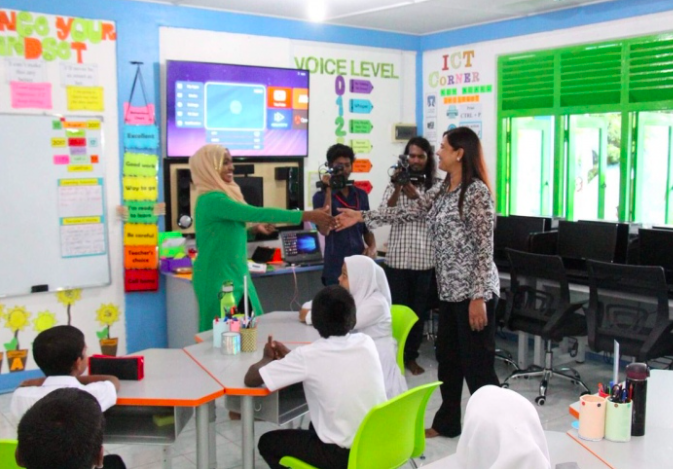
The Maldives Ministry of Education has launched an invitation for local authors to develop textbooks and digital content for the Cambridge International (CIA) curriculum. This initiative is aimed at supporting the national education system, specifically for Key Stage 4 (grades 9 and 10), and aligns with Cambridge’s international examination standards.
Education Minister Dr. Ismail Shafeeu, speaking last week, explained that while the Cambridge International Assessment (CIA) has been administered in the Maldives for 23 years, the necessary textbooks have traditionally been imported. The new project seeks to change this by fostering local talent in writing educational content tailored to the needs of Maldivian students, reducing costs and empowering local authors.
The Ministry encourages interested candidates to submit their proposals for the creation of textbooks and digital materials that meet CIA standards. A key goal is to ensure the materials are both culturally relevant and of high academic quality, while also expanding the country’s book-writing capabilities.
The invitation also serves as an opportunity to reduce the reliance on expensive imported textbooks and encourage a sustainable, local approach to educational publishing. The project aligns with the Maldives’ broader goals within the Commonwealth, where member states prioritize local solutions for education that also contribute to economic growth and cultural development.
Proposals for the project must be submitted by 2:00 pm on February 13th, with all questions and clarifications due by 1:00 pm on the preceding Thursday. This initiative represents a significant step toward increasing self-reliance in the education sector, fostering local expertise, and contributing to the overall development of the nation’s educational resources.
Education
Brunei Students Showcase Innovation at the 17th VIBE Identity Exhibition, Highlighting Commonwealth Talent

The 17th VIBE Identity Exhibition, launched yesterday at Kolej International Graduate Studies (KIGS) in Brunei, spotlighted a diverse array of final-year projects from students across multiple faculties. The event, which serves as a platform for young creatives, featured a range of works including product design, fashion design, interactive media, music videos, animation, application technology, and entrepreneurial concepts.
The exhibition was officially opened by Acting Director of Museums, Pengiran Haji Rosli bin Pengiran Haji Halus, with KIGS Chief Executive Officer Haji Mahrub bin Haji Murni also in attendance. The event attracted students, faculty, and industry professionals, creating an atmosphere of collaboration and innovation.
In her welcoming speech, Committee Member Francis Mae Catchero Tima-an of the Faculty of Arts and Humanities highlighted that the biannual exhibition not only allows students to showcase their creative talents but also fosters cross-disciplinary dialogue and collaboration. “The VIBE Identity Exhibition serves as a space for students to connect with professionals and one another, encouraging the exchange of ideas and furthering the creative spirit within Brunei’s academic and entrepreneurial communities,” Tima-an said.
As Brunei looks to enhance its position within the Commonwealth as a hub of innovation, this exhibition underscores the importance of nurturing creativity and entrepreneurship in the youth. By providing students with the tools and opportunities to express their ideas, KIGS is contributing to the country’s broader goals of fostering a knowledge-based economy and preparing the next generation of leaders and innovators.
The VIBE Identity Exhibition is expected to become a key event in Brunei’s cultural calendar, with potential to strengthen the island nation’s creative industries within the wider Commonwealth.

Cricket Diplomacy: How Sport Opens Doors for Commonwealth Business

Inside the Commonwealth Secretariat: How the 56-Nation Club Is Run from London

Card Processing Fees in the UK: A Plain-English Guide for Small Businesses

Progress is Painfully Slow’: Rudolph Walker Discusses Equality for Black Actors in the Commonwealth

Vipul Jain to Be Honored at Rising Bharat Conclave 2024 in the House of Commons for Transforming Wealth Management in Tribal Communities

Commonwealth Nations Celebrate Unity and Progress Under ‘Together We Thrive’ Theme

-
 Community & Culture2 years ago
Progress is Painfully Slow’: Rudolph Walker Discusses Equality for Black Actors in the Commonwealth
-
 Community & Culture2 years ago
Vipul Jain to Be Honored at Rising Bharat Conclave 2024 in the House of Commons for Transforming Wealth Management in Tribal Communities
-
 News2 years ago
Commonwealth Nations Celebrate Unity and Progress Under ‘Together We Thrive’ Theme
-

 Community & Culture2 years ago
Sri Lanka to Host Malayalam Film Starring Mammootty and Mohanlal: A Cultural Collaboration in the Commonwealth
-

 News2 years ago
Harnessing AI for Sustainable Tourism Growth in Zimbabwe: A Commonwealth Initiative
-

 News2 years ago
BIMSTEC Summit 2025 Highlights Regional Cooperation Aligned with Commonwealth Development Goals
-

 Education2 years ago
Dominican Chairman Oversees Caribbean Plant Health Directors Annual Meeting, Strengthening Commonwealth Agricultural Collaboration
-

 News2 years ago
INS Talwar Docks in Mombasa, Strengthening Kenya-India Naval Collaboration as Part of Commonwealth Relations