
Business
How to Set Up a UK Company from India: A Step-by-Step Guide
More Indian businesses are expanding into the UK. Here is a practical step-by-step guide to setting up a UK limited company from India — from Companies House and identity checks to banking and tax.

In short: A business owner in India can form a UK private limited company online without living in the UK. You need a UK registered office address, at least one director, and identity verification for directors and people with significant control. The online Companies House fee is £100 (from February 2026). The harder parts are usually banking, tax registration and getting the structure right.
With the UK–India trade agreement now in force and bilateral trade worth £48 billion in 2025, according to the UK government, many Indian entrepreneurs and companies are looking at a UK presence — to sell into Britain, access Europe, raise capital or serve the large British Indian community. The process is straightforward when done in the right order.
Can a non-UK resident set up a UK company?
Yes. Directors and shareholders do not need to be UK residents or citizens. However, the company must have a UK registered office address, and since 18 November 2025 directors and people with significant control must verify their identity with Companies House.
What are the steps to set up a UK company from India?
- Choose the structure. Most choose a private limited company (Ltd). Larger groups may set up a UK subsidiary of the Indian parent, or a branch — get advice on which suits your tax position.
- Pick a name and check it is available on the Companies House register.
- Arrange a UK registered office — a physical address in the UK where official post can be sent. Many use a formation agent or virtual office service.
- Verify identities. Directors and people with significant control complete identity verification with Companies House.
- Incorporate online with Companies House. The digital incorporation fee is £100.
- Register for tax. Register for Corporation Tax with HMRC, and for VAT and PAYE if required.
- Open a business account. This is often the slowest step for overseas-owned companies. Many start with an FCA-authorised electronic money institution while a bank account is arranged.
What should Indian businesses watch out for?
- Indian regulations: overseas investment by Indian residents and companies must follow India’s foreign exchange rules — speak to your Indian chartered accountant first.
- Tax residence: where the company is managed and controlled affects where it pays tax. The UK–India double taxation treaty helps avoid paying twice.
- Ongoing filings: annual accounts, a confirmation statement each year and tax returns are required, even if the company is not yet trading.
- Visas: owning a UK company does not give the right to work in the UK. Check the relevant immigration routes separately.
Limited company, subsidiary or branch: what is the difference?
| Option | What it is | Typically suits |
|---|---|---|
| New UK limited company | A separate UK company owned by individuals | Founders starting a new UK venture |
| UK subsidiary | A UK limited company owned by the Indian parent company | Established Indian businesses expanding abroad |
| UK establishment (branch) | The Indian company registered in the UK, without a separate legal entity | Testing the market or limited UK activity |
A subsidiary limits the parent’s liability and is often easier for UK customers, banks and partners to deal with. A branch is simpler but exposes the parent company directly. The right choice depends on tax, liability and long-term plans, so take advice on both sides before deciding.
What taxes will a UK company pay?
- Corporation Tax on profits. The main rate is 25% for profits above £250,000, with a small profits rate of 19% for profits up to £50,000 and marginal relief in between.
- VAT once taxable turnover passes the registration threshold of £90,000 in a rolling 12-month period. Some businesses register voluntarily earlier.
- PAYE and National Insurance if the company employs staff in the UK, including directors who draw a salary.
Tax rules change, so it is worth checking current rates on GOV.UK and working with an accountant who understands both UK and Indian requirements.
What rules apply on the Indian side?
Investment abroad by Indian residents and companies is governed by the Foreign Exchange Management Act and, since 2022, the Overseas Investment Rules and Regulations administered with the Reserve Bank of India. These set out what kinds of overseas investment are permitted, how much can be invested and what reporting is needed through an authorised bank. Getting this right at the start avoids problems when money needs to move between India and the UK.
What if staff need to move to the UK?
Owning a UK company does not give anyone the right to live or work in the UK. For overseas businesses setting up their first UK presence, the Global Business Mobility visa routes — including the UK Expansion Worker route — are designed to allow senior managers or specialists to come to the UK to establish the business. Eligibility criteria are strict and change from time to time, so check the latest Home Office guidance or speak to an immigration adviser.


Business
Diwali 2026: Why the Festival of Lights Is a Big Moment for UK Businesses
Diwali falls on Sunday 8 November 2026. For UK retailers, hospitality and service businesses, the Festival of Lights is one of the most important seasonal moments of the year — and one many still underestimate.
In short: Diwali 2026 falls on Sunday 8 November. Celebrated by Hindus, Sikhs and Jains, it is a season of gifting, new clothes, sweets, family gatherings and home spending — and for UK businesses it arrives just before the Christmas rush, making it one of the most valuable and most overlooked trading moments of the year.
For millions of British families, the weeks before Diwali are the busiest of the year. Homes are cleaned and decorated, gifts are bought for relatives and colleagues, new outfits are ordered and kitchens fill with sweets and savouries. From Leicester’s Belgrave Road — home to one of the largest Diwali celebrations outside India — to Southall, Wembley, Birmingham and Manchester, high streets light up for the festival.
Yet many UK businesses still plan their autumn around Halloween and Black Friday alone. That leaves real value on the table.
When is Diwali 2026?
Diwali itself falls on Sunday 8 November 2026, within a five-day festival that begins with Dhanteras — traditionally an auspicious day to buy gold, silver and household items — and ends with Bhai Dooj. For Sikhs, the same day marks Bandi Chhor Divas. Diwali is not a UK public holiday, so many families celebrate across the surrounding evenings and the weekend.
Why does Diwali matter for UK businesses?
The UK is home to one of the largest Indian diaspora communities in the world, and Diwali is the community’s biggest celebration of the year. Spending is concentrated in a short window and across several categories at once:
- Jewellery and gold — especially around Dhanteras
- Fashion — new outfits for family events and temple visits
- Food and sweets — mithai boxes, catering and restaurant bookings
- Gifting — hampers, homeware, electronics and corporate gifts
- Home and décor — lights, diyas, rangoli and home improvement
- Travel and hospitality — family visits and celebratory dining
Increasingly, mainstream brands and supermarkets run dedicated Diwali ranges, and more British businesses send Diwali greetings to clients and staff. Recognising the festival is no longer niche; it is part of good customer and employer relations in modern Britain.
How can small businesses make the most of Diwali?
- Plan early. Diwali shoppers buy in the two to three weeks before the festival. Stock, staffing and promotions need to be ready well before the day itself.
- Be authentic. Customers notice tokenism. Learn the basics — greetings such as “Happy Diwali” or “Shubh Deepavali”, what people buy and why — and involve staff or partners from the community.
- Make checkout effortless. Peak periods expose weak payment set-ups. Contactless, card-not-present and quick online checkout matter, as do clear delivery cut-off dates for gifts.
- Think gifting, not just discounts. Curated gift boxes, corporate hampers and gift cards often outperform price cuts during festive seasons.
- Connect Diwali to the wider season. Diwali leads naturally into Christmas trading. Customers who discover you in early November can become regulars through December.
Diwali across the Commonwealth
Diwali is a public holiday in several Commonwealth countries, including India, Singapore, Malaysia, Mauritius, Fiji, Guyana, Trinidad and Tobago, and Sri Lanka. For businesses that trade internationally, that matters: supply chains, customer service and payment volumes in these markets all shift around the festival — a useful reminder that cultural calendars are also business calendars.
The bottom line
Diwali is a reminder that Britain’s consumer calendar is more diverse than the traditional retail year suggests. Businesses that understand their communities — and plan for their celebrations as seriously as they plan for Christmas — earn loyalty that lasts well beyond one festive season.
Frequently asked questions
What date is Diwali in 2026 in the UK?
Diwali falls on Sunday 8 November 2026. It is part of a five-day festival that runs from Dhanteras to Bhai Dooj.
Is Diwali a bank holiday in the UK?
No. Diwali is not a public holiday in the UK, but it is widely celebrated, with major public events in cities such as Leicester, London and Birmingham.
How should a business wish customers Happy Diwali?
A simple “Happy Diwali” or “Wishing you a joyful Diwali” works well. Keep messages warm and genuine, and avoid using the festival only as a sales hook.
Related on CWN Times: CHOGM 2026 opens in Antigua with investment at the top of the agenda
Business
What Is the Commonwealth? A Business Guide to Its 56 Member Countries
The Commonwealth brings together 56 countries and 2.7 billion people. Here is how it works, who belongs, and why it still matters for businesses trading across borders.
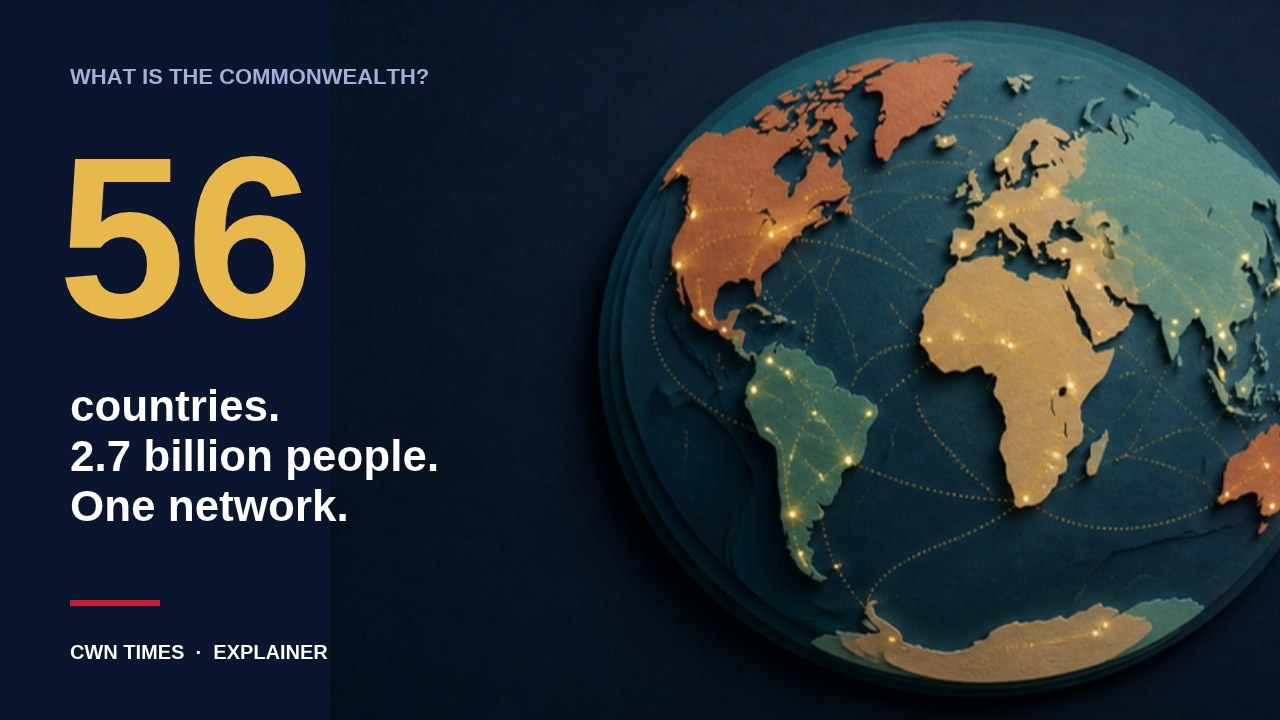
In short: The Commonwealth is a voluntary association of 56 independent countries with a combined population of around 2.7 billion people — more than 60% of them aged under 30. It is not a trading bloc, but shared language, legal traditions and institutions make doing business between members measurably cheaper.
Ask most people what the Commonwealth is and they will mention the Commonwealth Games or the King. Ask a business owner and the answer is often a shrug. Yet the Commonwealth covers some of the world’s fastest-growing markets — and for UK firms looking beyond Europe, it is one of the most useful maps there is.
What is the Commonwealth?
The Commonwealth of Nations is an association of equal, independent member countries that work together on shared goals such as democracy, development, trade and the rule of law. Membership is voluntary, and most — but not all — members have historic ties to Britain. Gabon and Togo, which had no such ties, joined in 2022.
King Charles III is Head of the Commonwealth. Its work is supported by the Commonwealth Secretariat, led by Secretary-General Shirley Botchwey, and leaders meet every two years at the Commonwealth Heads of Government Meeting (CHOGM). The 2026 summit, in Antigua and Barbuda, is focused on partnerships and investment.
Which countries are in the Commonwealth?
According to the Commonwealth Secretariat, the 56 members are spread across five regions:
| Region | Members | Examples |
|---|---|---|
| Africa | 21 | Nigeria, South Africa, Kenya, Ghana, Rwanda |
| Asia | 8 | India, Bangladesh, Pakistan, Malaysia, Singapore |
| Caribbean and Americas | 13 | Canada, Jamaica, Trinidad and Tobago, Guyana |
| Europe | 3 | United Kingdom, Malta, Cyprus |
| Pacific | 11 | Australia, New Zealand, Fiji, Samoa |
Thirty-three members are classed as small states — usually with populations under 1.5 million — and 25 of these are small island developing states.
What is the “Commonwealth advantage” for business?
The Commonwealth has no single free trade agreement, but members share features that reduce friction: English as a common working language, similar legal and accounting systems, familiar institutions and strong diaspora links. The Commonwealth Secretariat estimates bilateral trade costs between members are on average 19% lower than between non-members; the Commonwealth Enterprise and Investment Council puts the figure at around 21%.
Combined Commonwealth GDP was US$13.1 trillion in 2021, according to the Secretariat, and is projected to grow strongly through the decade — driven by large, young economies in Asia and Africa.
How can UK businesses use the Commonwealth network?
- Use bilateral trade deals. The UK has agreements with several members, including Australia, New Zealand, Canada and India.
- Follow the business forums. The Commonwealth Business Forum, held alongside CHOGM, connects firms with ministers and investors.
- Tap diaspora networks. Business councils and community organisations in the UK often have direct links into home markets.
- Join trade missions. Government and business-council delegations offer introductions that are hard to arrange alone.
The bottom line
The Commonwealth is less a trading bloc than a trust network. For businesses, its real value is familiarity — shared language, law and relationships that make the first deal in a new market easier to do. In a fragmented global economy, that advantage is worth more than ever.
Frequently asked questions
How many countries are in the Commonwealth?
There are 56 member countries in the Commonwealth: 21 in Africa, 8 in Asia, 13 in the Caribbean and Americas, 3 in Europe and 11 in the Pacific.
Is the Commonwealth a trading bloc?
No. The Commonwealth has no single free trade agreement, but shared language and legal systems lower trade costs between members, and many members have bilateral trade deals with each other.
Who leads the Commonwealth?
King Charles III is Head of the Commonwealth. The Commonwealth Secretariat is led by Secretary-General Shirley Botchwey, and heads of government meet every two years at CHOGM.
Related on CWN Times: CHOGM 2026 opens in Antigua with investment at the top of the agenda
Business
CHOGM 2026 Opens in Antigua With Investment at the Top of the Agenda
The 28th Commonwealth Heads of Government Meeting opens in St John’s, Antigua and Barbuda, under the theme “Accelerating Partnerships and Investment for a Prosperous Commonwealth”, with a business forum and a new pipeline of investment-ready projects.
London, UK — 1 November 2026
Key points: Leaders from the Commonwealth’s 56 member countries gather in St John’s, Antigua and Barbuda, from 1 to 4 November for the 28th Commonwealth Heads of Government Meeting (CHOGM). This year’s theme puts business first — “Accelerating Partnerships and Investment for a Prosperous Commonwealth” — backed by a Commonwealth Business Forum and a new platform of more than 60 investment-ready projects.
The 28th Commonwealth Heads of Government Meeting opens today in St John’s, the capital of Antigua and Barbuda, bringing together heads of government, ministers and representatives from business, civil society and youth organisations. Antigua and Barbuda is the smallest country ever to host CHOGM, and the summit coincides with the nation’s 45th anniversary of independence on 1 November.
It is also the first CHOGM convened by Commonwealth Secretary-General Shirley Botchwey, who took office in April 2025. “The world is changing and CHOGM 2026 is our moment to shape what comes next,” she said ahead of the summit.
Why is this CHOGM focused on investment?
The theme, “Accelerating Partnerships and Investment for a Prosperous Commonwealth”, reflects a deliberate shift towards practical economic outcomes. According to the Commonwealth Secretariat, CHOGM 2026 will for the first time bring government and business leaders together specifically to unlock investment.
On 20 October the Secretariat launched the Commonwealth Investment Platform, showcasing more than 60 high-impact projects submitted by 20 Commonwealth countries that are seeking financing. The Secretary-General has made support for small states, least developed countries and other vulnerable economies a key pillar of her leadership.
Host Prime Minister Gaston Browne set the tone at the summit’s launch: “Antigua and Barbuda is proud to open our doors to the Commonwealth in 2026 — to host, to listen, and to lead with purpose.”
What happens at the Commonwealth Business Forum?
The 14th Commonwealth Business Forum runs from 2 to 4 November at the Sticky Wicket cricket ground, hosted by the Commonwealth Enterprise and Investment Council (CWEIC) with the Government of Antigua and Barbuda and the Commonwealth Secretariat. CWEIC expects more than 900 delegates, including representatives of Afreximbank, the International Monetary Fund, the World Trade Organization, Royal Bank of Canada, De La Rue and Fortescue.
CWEIC describes the Commonwealth as a market of 2.7 billion people with a combined GDP of more than US$13 trillion, and says the cost of doing business between member countries is on average 21% lower, thanks to shared language, legal systems and regulatory traditions. The forum includes a business-matching system for pre-arranged one-to-one meetings, aimed at turning high-level discussion into deals.
King Charles III, as Head of the Commonwealth, will address the summit’s opening ceremony on 3 November and is also due to attend the Business Forum. Alongside the leaders’ meetings, the programme includes Youth, Women’s and People’s Forums.
What else is on the table?
UK Prime Minister Andy Burnham is attending. Caribbean leaders are expected to raise slavery and reparatory justice, although these are not formally on the agenda. Mr Burnham has said he is open to hearing calls for a formal apology but has ruled out financial reparations, a position Caribbean leaders have rejected.
Sudeep Sakalle’s take
“For UK businesses, the value of CHOGM is less in the communiqué and more in the room. A summit built around a live pipeline of investment-ready projects — with development banks, multilaterals and private investors at the same table — is a practical opening for British firms in infrastructure, fintech, digital services and professional services. Coming just months after the UK–India trade agreement took effect, it is a reminder that the Commonwealth’s shared language and legal systems still lower the cost of doing business. The firms that arrive prepared, with a clear offer and local partners, are the ones that will benefit.”
— Sudeep Sakalle, Business Leader & Strategic Adviser
Frequently asked questions
When and where is CHOGM 2026?
CHOGM 2026 takes place from 1 to 4 November 2026 in St John’s, Antigua and Barbuda. It is the 28th meeting of Commonwealth Heads of Government.
What is the theme of CHOGM 2026?
The theme is “Accelerating Partnerships and Investment for a Prosperous Commonwealth”, focusing on collaboration, sustainable investment and shared prosperity across the 56 member countries.
Can businesses take part in CHOGM 2026?
Yes. The Commonwealth Business Forum, run by the Commonwealth Enterprise and Investment Council from 2 to 4 November, brings together business leaders, investors and ministers, with pre-arranged one-to-one business meetings.
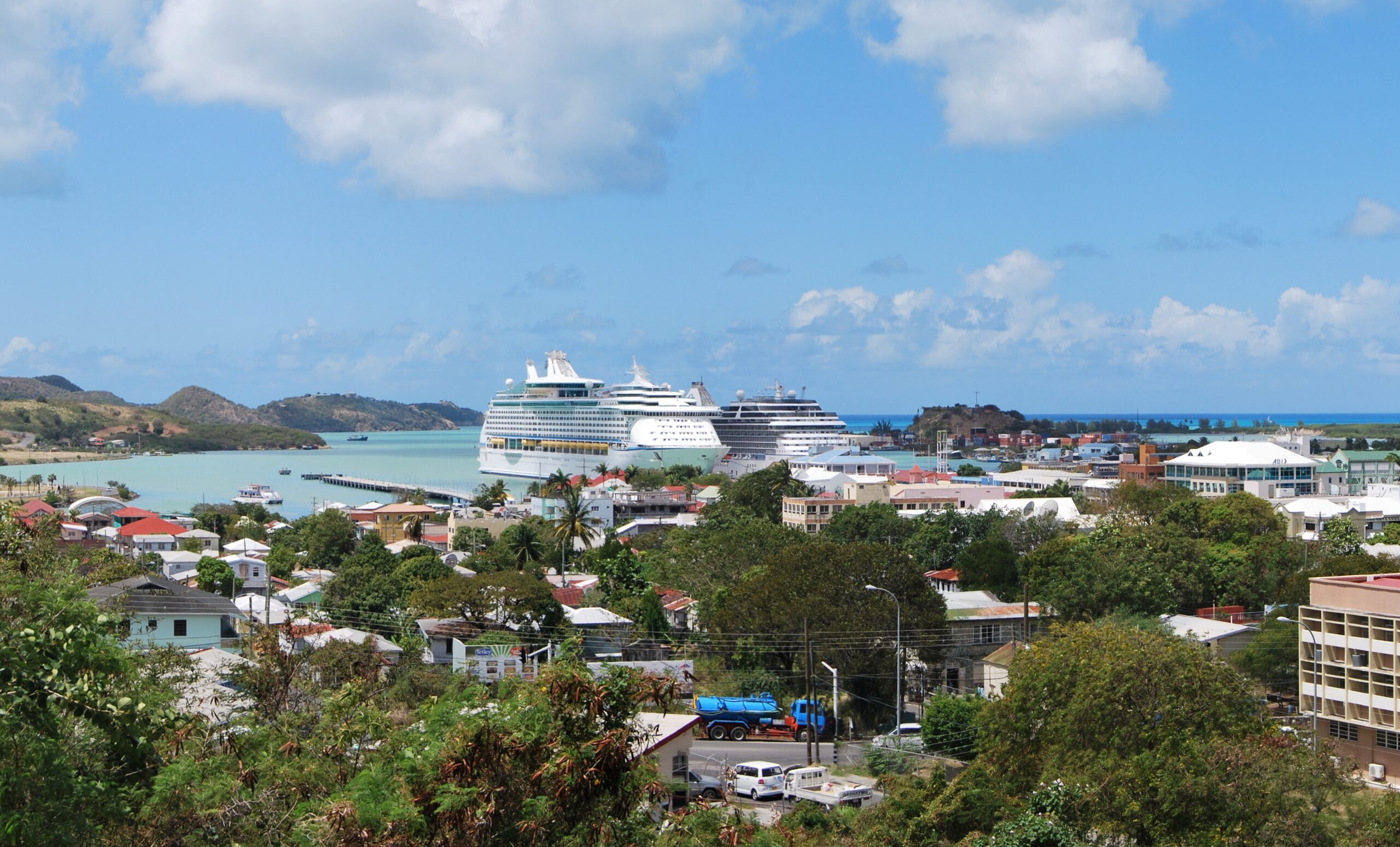
Featured image: St John’s harbour, Antigua. Photo via Wikimedia Commons, openly licensed.
Related on CWN Times: India–UK sign historic CETA · CHOGM 2024 closing ceremony

How to Set Up a UK Company from India: A Step-by-Step Guide

Commonwealth Welcomes UK Talks on Reparations: What the Antigua Dialogue Means

King Charles Voices ‘Profound Sorrow’ Over Slavery at CHOGM, Stops Short of Apology

Progress is Painfully Slow’: Rudolph Walker Discusses Equality for Black Actors in the Commonwealth

Vipul Jain to Be Honored at Rising Bharat Conclave 2024 in the House of Commons for Transforming Wealth Management in Tribal Communities

Commonwealth Nations Celebrate Unity and Progress Under ‘Together We Thrive’ Theme

-
 Community & Culture2 years ago
Progress is Painfully Slow’: Rudolph Walker Discusses Equality for Black Actors in the Commonwealth
-
 Community & Culture2 years ago
Vipul Jain to Be Honored at Rising Bharat Conclave 2024 in the House of Commons for Transforming Wealth Management in Tribal Communities
-
 News2 years ago
Commonwealth Nations Celebrate Unity and Progress Under ‘Together We Thrive’ Theme
-

 Community & Culture2 years ago
Sri Lanka to Host Malayalam Film Starring Mammootty and Mohanlal: A Cultural Collaboration in the Commonwealth
-

 Education2 years ago
Dominican Chairman Oversees Caribbean Plant Health Directors Annual Meeting, Strengthening Commonwealth Agricultural Collaboration
-

 News2 years ago
Harnessing AI for Sustainable Tourism Growth in Zimbabwe: A Commonwealth Initiative
-

 News2 years ago
BIMSTEC Summit 2025 Highlights Regional Cooperation Aligned with Commonwealth Development Goals
-

 News2 years ago
INS Talwar Docks in Mombasa, Strengthening Kenya-India Naval Collaboration as Part of Commonwealth Relations