
News
Lesotho’s LSP Construction Accused of Delaying Projects and Inflating Costs, Raising Concerns for Commonwealth Governance Standards

In Lesotho, the Public Accounts Committee (PAC) has accused LSP Construction, one of the country’s major construction firms, of “milking” the government by intentionally delaying state projects and inflating costs. The firm is under scrutiny for its handling of the upgrade to the country’s main airport, where the original budget of M50 million has soared to M184 million.
The PAC’s findings suggest that LSP Construction has repeatedly failed to meet project deadlines, a tactic the committee claims is designed to drive up costs while benefiting from extended contracts. This has resulted in considerable financial strain on the government, which has struggled to maintain oversight and ensure that infrastructure projects remain on schedule and within budget.
The airport upgrade, a critical project aimed at enhancing Lesotho’s connectivity and boosting its economic growth, has now become emblematic of the challenges facing the country’s public sector in managing large-scale projects. With a budget escalation of over 260%, the project has sparked significant concern about mismanagement and the lack of accountability in public procurement processes.
The allegations against LSP Construction have raised questions about the broader issues of corruption and inefficiency within government contracting, highlighting the importance of transparent and responsible governance. As a member of the Commonwealth, Lesotho is expected to uphold principles of good governance, fiscal responsibility, and accountability, all of which are crucial for fostering sustainable development and strengthening public trust.
The situation serves as a reminder of the challenges many Commonwealth nations face in ensuring that public funds are spent effectively and in line with the public interest, and that businesses involved in state contracts are held accountable for their actions.

Business
US$30bn of Projects and a New Trade Portal: CHOGM 2026’s Business Agenda
A Commonwealth Investment Platform with more than 60 projects worth around US$30bn, a new Trade Portal and a push on critical minerals: what CHOGM 2026 means for businesses.

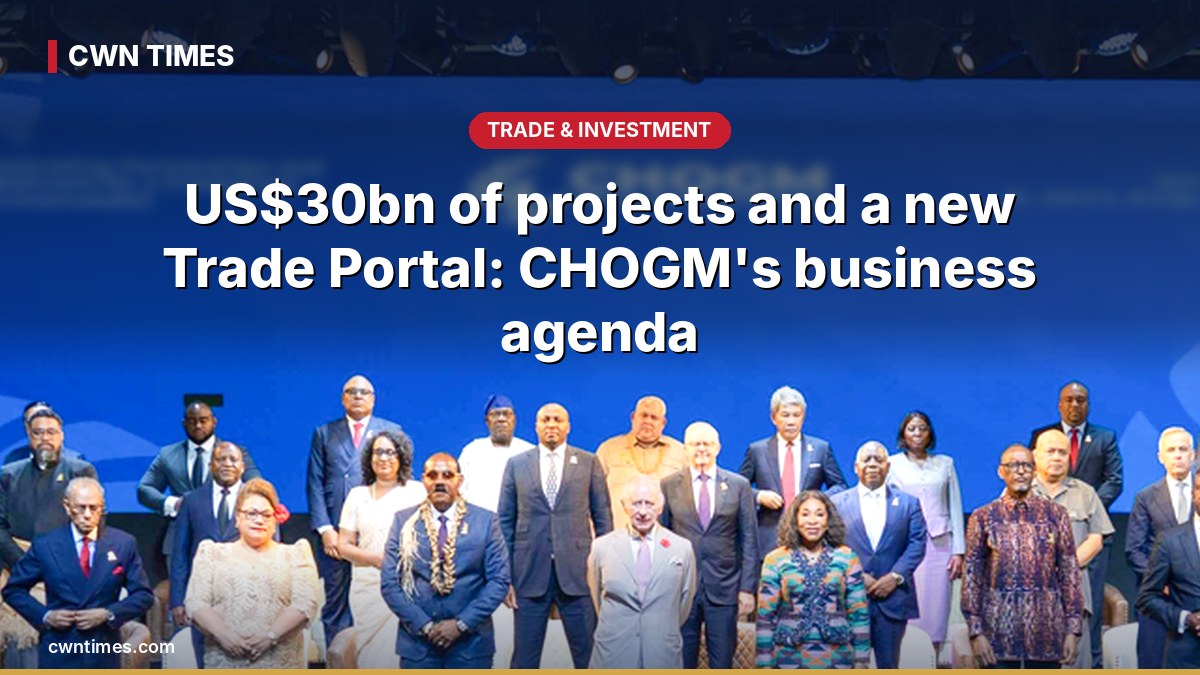
The theme of the Antigua summit, “Accelerating Partnerships and Investment for a Prosperous Commonwealth”, was a deliberate signal. According to the Commonwealth Secretariat, it was the first CHOGM designed to bring government and business leaders together specifically to unlock investment. The result is a set of practical tools and commitments that matter to companies trading across the 56 member countries.
What is the Commonwealth Investment Platform?
The Secretariat launched the Commonwealth Investment Platform on 20 October 2026, two weeks before the summit. It showcases more than 60 projects from 20 Commonwealth countries that are looking for finance. Projects were selected for three qualities: investment readiness, development impact and commercial potential. Together they represent around US$30 billion of potential investment across energy, transport, agriculture, manufacturing and the green economy.
Secretary-General Shirley Botchwey framed the platform as a direct pitch to investors. “Our job is to make a compelling case for investors,” she said at the launch. She argued that the projects could mobilise significant investment, create jobs, strengthen resilience and support industrialisation, and that the quality of the pipeline shows Commonwealth countries have the ideas and opportunities to deliver lasting economic change.
What did leaders agree on trade?
The summit communiqué contains several trade commitments. Members agreed to work on easing unnecessary barriers to trade in goods and services between them, and reaffirmed support for the World Trade Organization and for its reform. They welcomed the launch of a Commonwealth Trade Portal, intended to make it easier for businesses to find information and opportunities across member markets.
Two further points stand out. Leaders encouraged processing critical minerals, such as those used in batteries and electronics, in the countries where they are mined, so that more value and jobs stay in producer economies. And they gave particular attention to small businesses owned by women and young people, which often struggle most to reach export markets and finance.
How big is the Commonwealth market?
The Secretariat’s 2026 Commonwealth Trade Review puts combined Commonwealth GDP at US$15.9 trillion in 2025. It projects growth to US$16.9 trillion in 2026 and US$20 trillion by 2029. The membership covers about 2.7 billion people, a large share of them under 30, spread across Africa, Asia, the Caribbean and Americas, Europe and the Pacific.
The Commonwealth has long argued that its members trade more cheaply with each other thanks to shared language, similar legal systems and familiar business practices. That idea, often called the “Commonwealth advantage”, sits behind the push to grow trade within the group.
How does finance reform fit in?
Investment and debt are closely linked. Leaders called for reforms to help small island states, least developed countries and landlocked developing countries access affordable finance, including debt frameworks that take climate vulnerability into account and allow repayments to pause after major crises. They also backed private investment, stronger domestic revenue collection and action against illicit financial flows. UK Prime Minister Andy Burnham’s proposal to lead debt restructuring for the Commonwealth’s poorest countries adds weight to this agenda.
What does it mean for UK businesses?
For UK firms, the Investment Platform is a practical starting point. A vetted list of projects seeking finance creates openings for engineering, construction, finance, legal, insurance and technology providers. The trade commitments matter most to exporters and importers already active in Commonwealth markets, especially where the UK has trade agreements in place, such as with Australia, New Zealand, Singapore and the Caribbean.
The focus on critical minerals is relevant to UK manufacturers and battery supply chains, while the support for women- and youth-owned businesses may open partnership and supplier opportunities. The AI and digital commitments in the same communiqué also point to demand for skills, infrastructure and cybersecurity services across the membership.
What happens next?
The real measure of Antigua’s business agenda will be delivery. Businesses and investors should watch which Investment Platform projects attract funding and reach financial close, how quickly the Trade Portal becomes a useful everyday tool, and whether members take concrete steps to remove the trade barriers they committed to tackling. The Commonwealth has set out a clear economic offer. The next two years will show how much of it turns into deals, jobs and trade.
Business
How to Set Up a UK Company from India: A Step-by-Step Guide
More Indian businesses are expanding into the UK. Here is a practical step-by-step guide to setting up a UK limited company from India — from Companies House and identity checks to banking and tax.

In short: A business owner in India can form a UK private limited company online without living in the UK. You need a UK registered office address, at least one director, and identity verification for directors and people with significant control. The online Companies House fee is £100 (from February 2026). The harder parts are usually banking, tax registration and getting the structure right.
With the UK–India trade agreement now in force and bilateral trade worth £48 billion in 2025, according to the UK government, many Indian entrepreneurs and companies are looking at a UK presence — to sell into Britain, access Europe, raise capital or serve the large British Indian community. The process is straightforward when done in the right order.
Can a non-UK resident set up a UK company?
Yes. Directors and shareholders do not need to be UK residents or citizens. However, the company must have a UK registered office address, and since 18 November 2025 directors and people with significant control must verify their identity with Companies House.
What are the steps to set up a UK company from India?
- Choose the structure. Most choose a private limited company (Ltd). Larger groups may set up a UK subsidiary of the Indian parent, or a branch — get advice on which suits your tax position.
- Pick a name and check it is available on the Companies House register.
- Arrange a UK registered office — a physical address in the UK where official post can be sent. Many use a formation agent or virtual office service.
- Verify identities. Directors and people with significant control complete identity verification with Companies House.
- Incorporate online with Companies House. The digital incorporation fee is £100.
- Register for tax. Register for Corporation Tax with HMRC, and for VAT and PAYE if required.
- Open a business account. This is often the slowest step for overseas-owned companies. Many start with an FCA-authorised electronic money institution while a bank account is arranged.
What should Indian businesses watch out for?
- Indian regulations: overseas investment by Indian residents and companies must follow India’s foreign exchange rules — speak to your Indian chartered accountant first.
- Tax residence: where the company is managed and controlled affects where it pays tax. The UK–India double taxation treaty helps avoid paying twice.
- Ongoing filings: annual accounts, a confirmation statement each year and tax returns are required, even if the company is not yet trading.
- Visas: owning a UK company does not give the right to work in the UK. Check the relevant immigration routes separately.
Limited company, subsidiary or branch: what is the difference?
| Option | What it is | Typically suits |
|---|---|---|
| New UK limited company | A separate UK company owned by individuals | Founders starting a new UK venture |
| UK subsidiary | A UK limited company owned by the Indian parent company | Established Indian businesses expanding abroad |
| UK establishment (branch) | The Indian company registered in the UK, without a separate legal entity | Testing the market or limited UK activity |
A subsidiary limits the parent’s liability and is often easier for UK customers, banks and partners to deal with. A branch is simpler but exposes the parent company directly. The right choice depends on tax, liability and long-term plans, so take advice on both sides before deciding.
What taxes will a UK company pay?
- Corporation Tax on profits. The main rate is 25% for profits above £250,000, with a small profits rate of 19% for profits up to £50,000 and marginal relief in between.
- VAT once taxable turnover passes the registration threshold of £90,000 in a rolling 12-month period. Some businesses register voluntarily earlier.
- PAYE and National Insurance if the company employs staff in the UK, including directors who draw a salary.
Tax rules change, so it is worth checking current rates on GOV.UK and working with an accountant who understands both UK and Indian requirements.
What rules apply on the Indian side?
Investment abroad by Indian residents and companies is governed by the Foreign Exchange Management Act and, since 2022, the Overseas Investment Rules and Regulations administered with the Reserve Bank of India. These set out what kinds of overseas investment are permitted, how much can be invested and what reporting is needed through an authorised bank. Getting this right at the start avoids problems when money needs to move between India and the UK.
What if staff need to move to the UK?
Owning a UK company does not give anyone the right to live or work in the UK. For overseas businesses setting up their first UK presence, the Global Business Mobility visa routes — including the UK Expansion Worker route — are designed to allow senior managers or specialists to come to the UK to establish the business. Eligibility criteria are strict and change from time to time, so check the latest Home Office guidance or speak to an immigration adviser.
Commonwealth
Commonwealth Welcomes UK Talks on Reparations: What the Antigua Dialogue Means
CHOGM 2026 leaders welcomed the UK’s agreement to a “structured, time-bound, inclusive and good-faith” dialogue on the transatlantic slave trade. Here is what was agreed, what was not, and what to watch next.
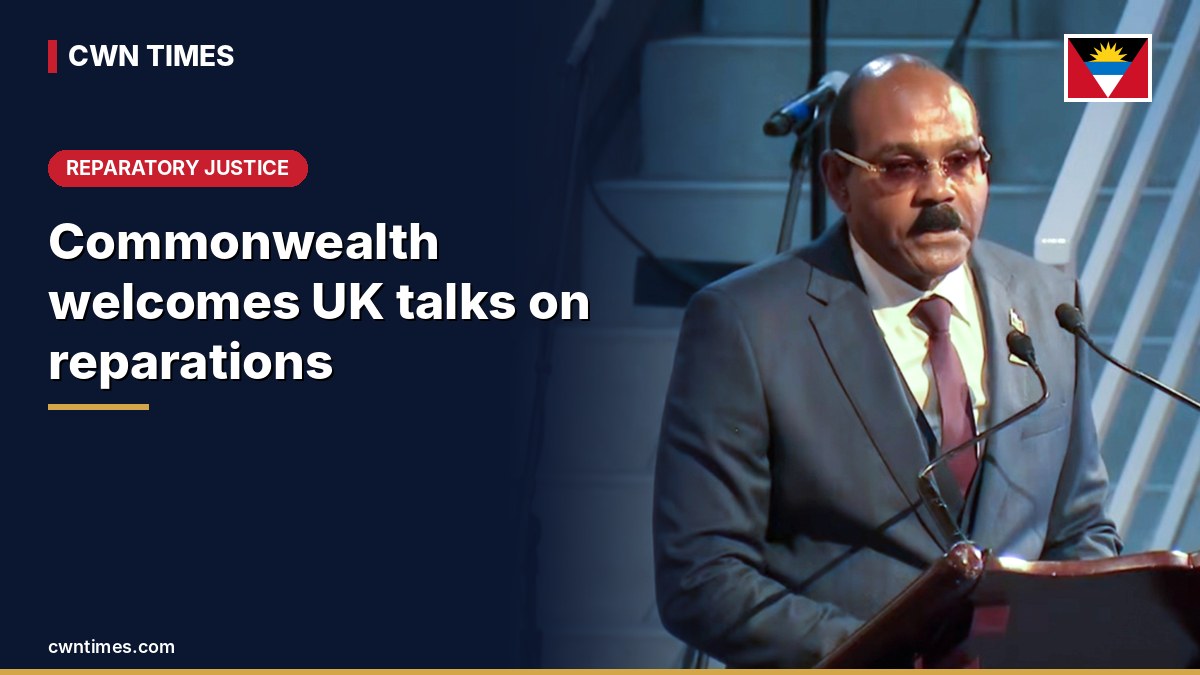
For years, reparatory justice has been raised at Commonwealth summits and then quietly set aside. In Antigua, that changed. When leaders closed the 28th Commonwealth Heads of Government Meeting in St John’s on 4 November, their communiqué recorded something new: the United Kingdom’s agreement to enter talks with affected parties about the slave trade and its legacy.
It is a carefully drafted outcome, and both supporters and sceptics of reparations can point to parts of it. Understanding what it does, and does not, commit to is the key to understanding what comes next.
What exactly does the communiqué say?
Leaders welcomed the UK’s agreement to a dialogue described as “structured, time-bound, inclusive and good-faith”. The text places this within developments since the previous summit in Samoa in 2024, including work by the African Union and CARICOM on reparatory justice and on the return of cultural heritage taken during the colonial era. It also notes a United Nations General Assembly resolution describing the trafficking and enslavement of Africans as “the gravest crime against humanity”.
Each word in the description of the dialogue matters. “Structured” suggests a formal process rather than informal contacts. “Time-bound” suggests it should lead somewhere within a set period. “Inclusive” leaves room for more than governments to take part, and “good-faith” signals that both sides are expected to engage seriously.
What was not agreed?
The communiqué does not create a compensation fund, commit any government to payments or set out a start date, venue or agenda for the talks. Those gaps are deliberate. In the days before the summit, UK Prime Minister Andy Burnham said the UK was open to a formal apology but ruled out financial reparations. He proposed instead that the UK lead a debt restructuring programme for the Commonwealth’s poorest countries.
At the summit’s opening, King Charles III spoke of “the most profound personal sorrow” over the slave trade but did not apologise. The combination of royal regret, a government open to apology but not payment, and an agreed dialogue defines the space in which the talks will now take place.
How did the issue reach this point?
CARICOM, the 15-member Caribbean Community, adopted a Ten-Point Plan for Reparatory Justice in 2014. It calls for a formal apology, development support, debt cancellation, investment in health and education and cultural restitution, among other measures. The African Union has since made reparations a continental priority.
At the 2024 summit in Samoa, Commonwealth leaders agreed for the first time that the time had come for a “meaningful, truthful and respectful conversation” about the slave trade’s legacy, despite reluctance from the UK government of the day. Antigua’s host, Prime Minister Gaston Browne, made reparations one of his summit priorities, and Ralph Gonsalves of St Vincent and the Grenadines and other Caribbean voices urged that it be central to the agenda.
How have leaders reacted?
Caribbean governments see the agreement as progress, but not an end point. Guyana’s President Mohamed Irfaan Ali said an apology should be the King’s next step. Prime Minister Browne linked reparations to the region’s debt and climate pressures, saying no nation should have to sacrifice its future just to survive the present. Campaigners outside the summit venue carried signs reading “Acknowledge the wrong. Commit to repair.”
Why does it matter beyond the Caribbean?
Reparations are often framed as a question of history, but the debate in Antigua was also about economics. Many Caribbean states carry heavy debts and face rising costs from hurricanes and sea-level rise. That is why the UK’s debt restructuring proposal, and the communiqué’s call for debt frameworks that allow repayments to pause after major crises, are closely linked to the reparations discussion. For African members, cultural restitution and development finance are also part of the picture.
What happens next?
The first test is design. Observers will watch who sits at the table, whether CARICOM, the African Union and civil society take part alongside governments, and what “time-bound” turns out to mean in practice. The second is whether the UK moves from openness to a formal apology to actually making one. The third is whether debt relief becomes part of the dialogue. The Commonwealth now has a process where it once had only speeches. The next two years will show what that process can deliver.

US$30bn of Projects and a New Trade Portal: CHOGM 2026’s Business Agenda

How to Set Up a UK Company from India: A Step-by-Step Guide

Commonwealth Welcomes UK Talks on Reparations: What the Antigua Dialogue Means

Progress is Painfully Slow’: Rudolph Walker Discusses Equality for Black Actors in the Commonwealth

Vipul Jain to Be Honored at Rising Bharat Conclave 2024 in the House of Commons for Transforming Wealth Management in Tribal Communities

Commonwealth Nations Celebrate Unity and Progress Under ‘Together We Thrive’ Theme

-
 Community & Culture2 years ago
Progress is Painfully Slow’: Rudolph Walker Discusses Equality for Black Actors in the Commonwealth
-
 Community & Culture2 years ago
Vipul Jain to Be Honored at Rising Bharat Conclave 2024 in the House of Commons for Transforming Wealth Management in Tribal Communities
-
 News2 years ago
Commonwealth Nations Celebrate Unity and Progress Under ‘Together We Thrive’ Theme
-

 Community & Culture2 years ago
Sri Lanka to Host Malayalam Film Starring Mammootty and Mohanlal: A Cultural Collaboration in the Commonwealth
-

 Education2 years ago
Dominican Chairman Oversees Caribbean Plant Health Directors Annual Meeting, Strengthening Commonwealth Agricultural Collaboration
-

 News2 years ago
BIMSTEC Summit 2025 Highlights Regional Cooperation Aligned with Commonwealth Development Goals
-

 News2 years ago
Harnessing AI for Sustainable Tourism Growth in Zimbabwe: A Commonwealth Initiative
-

 News2 years ago
INS Talwar Docks in Mombasa, Strengthening Kenya-India Naval Collaboration as Part of Commonwealth Relations